
Newest
Popular
Products
Can’t find what you are looking for, please call 1800 812 321 or email us on info@billi.com.au
Billi Media
What Does a Micron Water Filter Remove
In the world of water filtration, the effectiveness of a filter is often measured in the size of the filter. In this guide, the experts at Billi will answer common questions like: “How many microns is a good water filter?” and compare what a 5-micron filter removes to a 0.5-micron filter or smaller.
Applying over 30 years of water filtration expertise, Billi can help you understand the different micron filtration levels in water filters, what they mean and what they remove. Keep reading to learn the differences or contact us today for more information.
Are Water Filters Effective?
Water filters can be effective in filtering out a number of chemical and organic elements, plus they can make substantial improvements in odour and taste.
But as consumer magazine, Choice notes, you should always look for certification in any water filtration system.
At Billi our premium filters boast the Australian Standards WaterMark for product safety and consumer confidence to ensure you and your family have the highest level of drinking water available.
Plus, we offer a multistage filtration system – which utilises BWT’s unique Fibron X® technology. This system:
- filters out particles
- reduces chlorine and organic chemicals
- removes parasitic cysts giardia and cryptosporidium (0.2 Micron filter only).
Understanding Micron Ratings
A micron, short for micrometre, represents one-millionth of a metre. The micron rating of a filter indicates the size of the particles it can capture. Put simply, smaller micron numbers mean finer filtration, catching smaller particles and providing cleaner water.
What Does a 5-Micron Water Filter Remove?
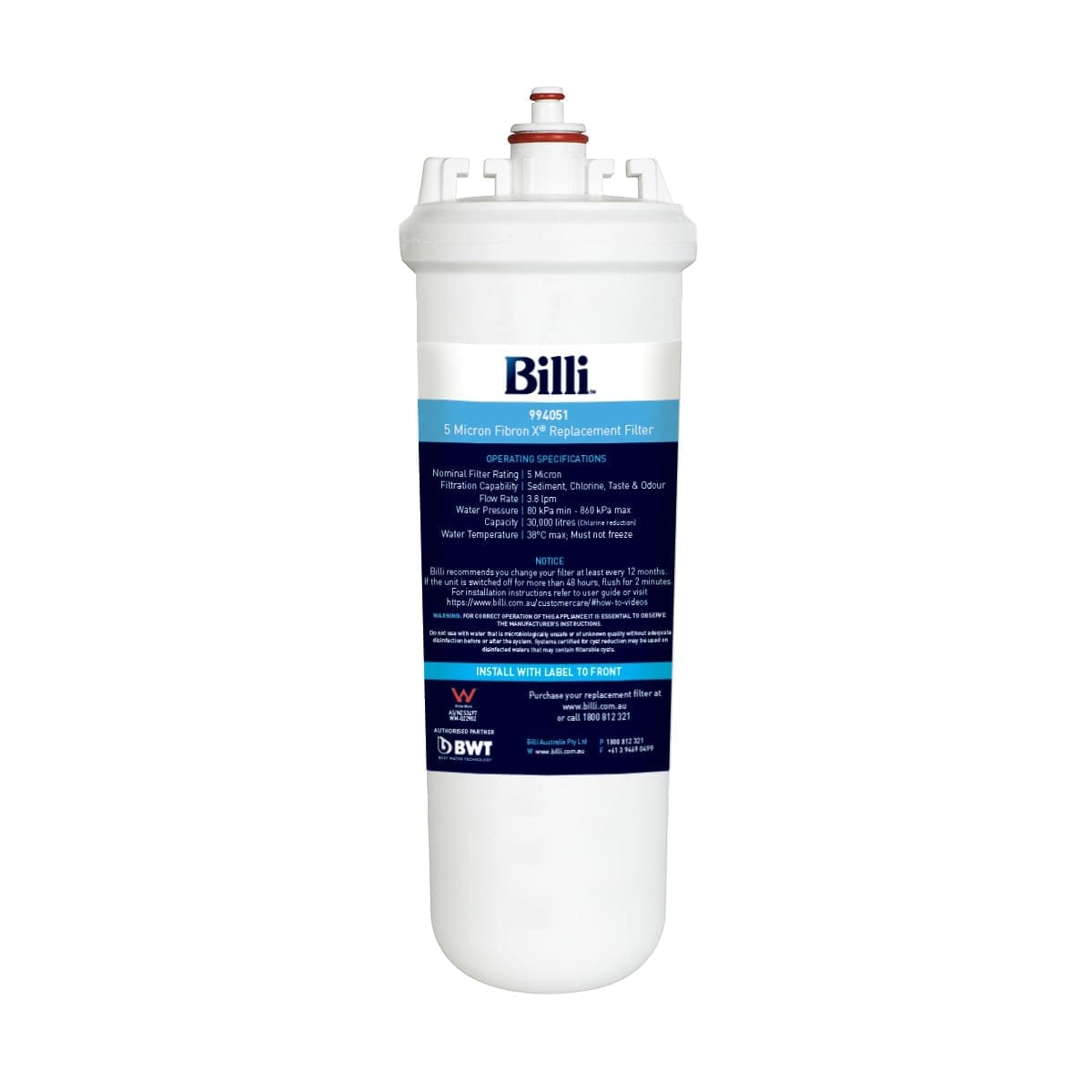
Generally speaking, the smaller the micron number the better. Try imagining microns like a sieve. A 5-micron water filter will sieve out particles that you can see – but all the other smaller particles will pass through it into your drinking water, though in the case of Billi’s advanced filters 5 Micron Filters can also remove some common chemicals like chlorine. This level of filtration is particularly effective in improving the taste and clarity of your water, making it a standard choice for many households and businesses.
Are Finer Filters Necessary?
The answer depends on your water source and how important hygiene and peace of mind are to your work or business, for example looking at what a 1-Micron Filter removes compared to a 5-Micron Filter actually shows a significant increase in the filtration capability. This finer filter can catch particles invisible to the naked eye, making it suitable for those who want a higher level of water purity. However, it is less effective at reducing heavy metals, or parasitic cysts like giardia and cryptosporidium. For those contaminants, even smaller filters are recommended.
Sub-Micron Filtration: What Do 0.5 Micron Water Filters Remove?
For those concerned about lead, heavy metals, and parasitic cysts such as giardia and cryptosporidium, a sub-micron filter is advisable. A 1 or even 0.5 Micron water filter reduces quite a lot – but even smaller than the 0.5-micron filter, is Billi’s premium 0.2-micron filter which can:
- Filter out particles in the water
- Reduce chlorine and organic chemicals
- Remove parasitic cysts giardia cryptosporidium and;
- Reduce heavy metals.
What Makes Billi’s Filtration Great?
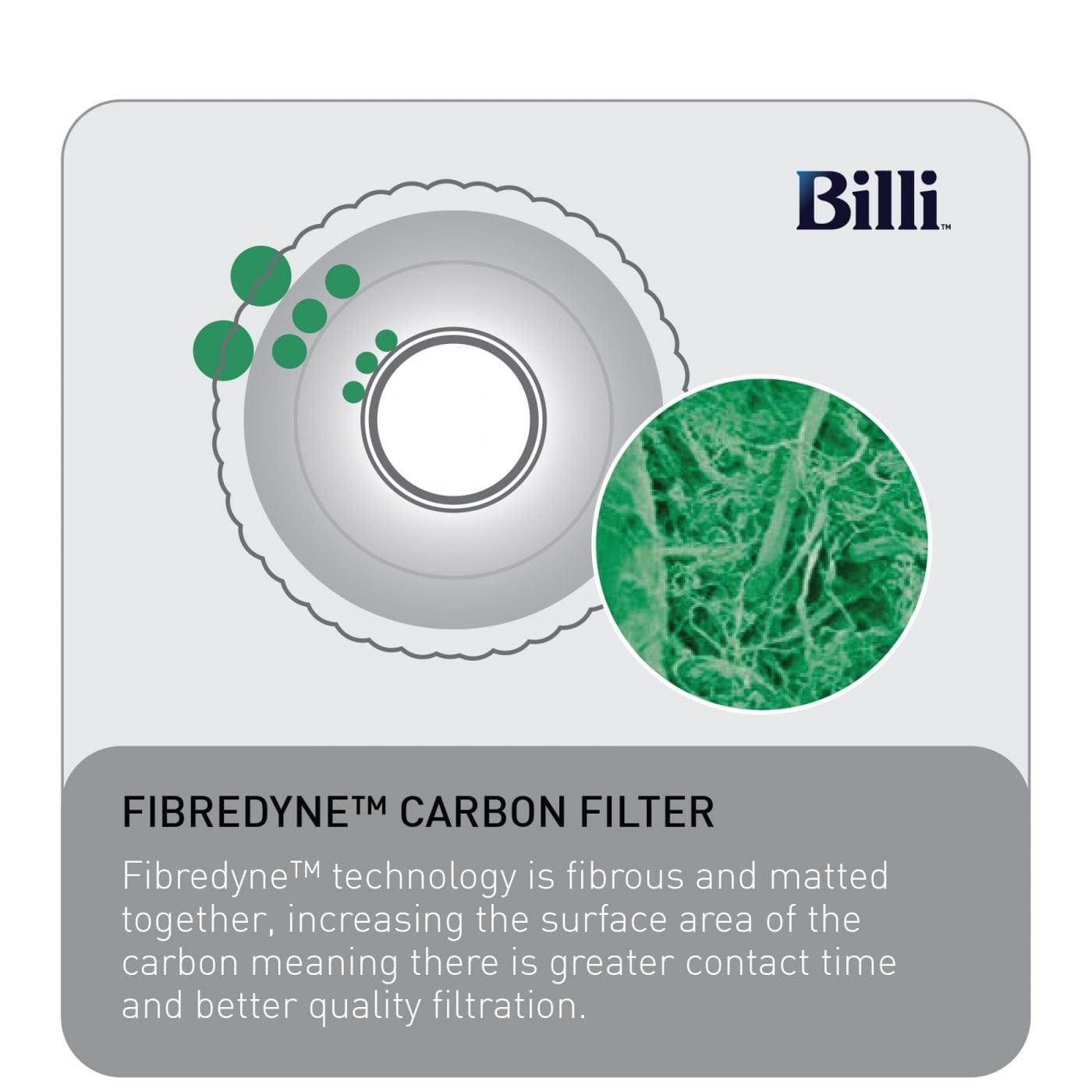
Billi’s partnership with BWT, Europe’s largest water treatment products company, allows for filters with unique Fibron X technology. This ensures a graded density profile, resulting in superior contaminant reduction performance and capacity. Whether you need a 5-micron water filter or ultra-fine 0.2-micron-filtered water, Billi has a solution that fits your needs, backed by a commitment to innovation, quality, and sustainability.
What Do Billi’s Tap Water Filters Remove?
Our filters contain a multistage filtration system which includes a cyst filtration layer, a core and a post-filtration layer that traps fine particles. Specifically, Billi’s filters:
- Remove particles in the water
- Remove parasitic cysts (0.2 Micron only)
- Reduce heavy metals (0.2 Micron only)
- Reduce chlorine and organic chemicals
Our filters also enable minerals to travel through the appliance without allowing any scale to build. Find a Billi that suits you.
Differences Between Our Micron Filters
Traditional cartridge filters are low cost and easy to change however they do have shorter life spans as particles plugs their pores within the cartridge membrane. A micron filter is able to capture smaller particles and more of them compared to traditional filters due to the higher surface area of the filter.
The 5 micron filter is very effective at capturing particles, providing you with cleaner, higher quality drinking water. Because particles are trapped throughout the filter rather than just the filter surface, it provides a more effective level of filtration that is also maintained for longer – the filter surface doesn’t get blocked and water pressure is maintained which provides a higher flow rate.
Submicron filters such as a 0.5 micron water filter or the more advanced 0.2 micron water filter have further filtration capabilities as the smaller openings are able to filter more, including bacteria. Our water filters are available in the following three options – HSD and 0.2 & 5 micron filters.
Choosing the Right Micron Rating
Determining the right micron rating for your water filter depends on several factors, including your water source, the contaminants present, and your specific needs. Here’s a simple guide to help you choose:
- Assess Your Water Source: If you are using municipal water, a 5-micron filter might suffice to remove visible particles and improve taste. However, for well water or other sources that might contain more contaminants, a finer filter could be necessary.
- Identify Contaminants: Knowing the specific contaminants in your water is crucial. For instance, if you are concerned about chlorine, a 5-micron filter from Billi will help. For parasitic cysts, you’ll need a filter with a rating of 1 micron or finer.
- Consider Usage and Health Concerns: If water purity is a top priority for health reasons, such as in a home with young children or hospitals and aged-care facilities with immunocompromised individuals, opting for a sub-micron filter (0.5 microns or less) ensures the highest level of filtration.
- Consult Experts: For personalised advice, consulting with experts like those at Billi can help you determine the best filter for your needs. They can provide insights based on your specific circumstances and the latest filtration technologies.
Get the Right Filter with Billi
Understanding the significance of micron ratings in water filters is key to choosing the right filtration system for your needs. Billi Australia offers a range of filters to ensure your water is clean, safe and tastes great. From 5-micron water filters to our premium 0.2-micron options, we provide peace of mind with every sip. Our filters have been independently tested and certified by IAPMO to international standards, ensuring reliability and effectiveness.
For more information or to find the perfect filtration solution for you, view our filters or contact us to speak to one of our experts.

CATEGORIES
ARCHIVES
- April 2026
- March 2026
- February 2026
- January 2026
- December 2025
- November 2025
- October 2025
- September 2025
- August 2025
- July 2025
- June 2025
- May 2025
- April 2025
- March 2025
- February 2025
- January 2025
- December 2024
- November 2024
- October 2024
- September 2024
- August 2024
- July 2024
- June 2024
- May 2024
- April 2024
- March 2024
- February 2024
- November 2023
- September 2023
- June 2023
- April 2023
- March 2023
- January 2023
- December 2022
- November 2022
- October 2022
- July 2022
- June 2022
- April 2022
- March 2022
- January 2022
- December 2021
- November 2021
- October 2021
- September 2021
- August 2021
- July 2021
- June 2021
- November 2020
- June 2020
- February 2020
- January 2020
- November 2019
- October 2019
- September 2019
- July 2019
- April 2019
- March 2019
- February 2019
- November 2018
- May 2018
- February 2018
- October 2017
- May 2017
- January 2017
- October 2016
- September 2016
- April 2015
- March 2015
- November 2014
- October 2014


